
Team Member Category Advisory Group

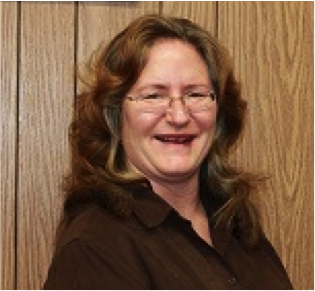
Tracy Marshall

Tracy Marshall is from Potlotek First Nation. She is an active member of CEPI Youth, and currently the Youth Coordinator for CEPI. She sits on the Bras d’Or Lakes Biosphere Reserve Association Board of Directors as the youth representative. As a child, she started to learn about melting “ice caps” and was concerned for polar bears, and ever since haven’t stopped being an activist for the environment. Not knowing where to start, she just stopped littering and encouraging friends and family not to as well. The rest was a ripple effect from that moment on.

Tracy was a co-organizer of the CLP 2019 Youth Retreat, a Thinker in the May-June 2020 retreat and a trusted advisor. She is working with CLP to collate written transcripts of Elder Albert Marshall’s teachings. Tracy is in the Bachelor of Arts and Science in Environment program at Cape Breton University.
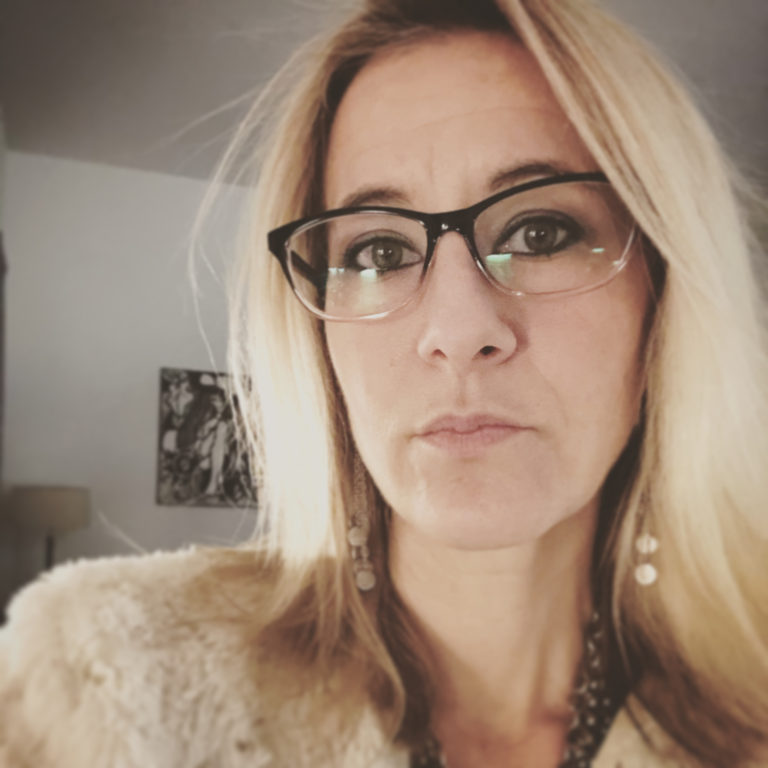

Regan Rosberg

Regan Rosburg (b. 1977) is an interdisciplinary artist who weaves together science, psychology, history, and social engagement. With a passion for studying various ecosystems and biota, her work investigates not only the exquisite intelligence of ecology, but also the causes and ramifications of over-consumption.

She is represented by William Havu Gallery (Denver, CO), and teaches at the Rocky Mountain College of Art and Design. She is the artistic director of Cayo Artist Residency in Eleuthera (Bahamas). 

In 2020 she published The Church of Water: A Portrait of the Arctica collection of images from her 2019 Arctic Circle Residency expedition. She outlines the scientific research that went into planning her trip, as well as the insights she had about plastic pollution, overconsumption, beauty and time.

Publications and interviews include Yale University’s “Order of Multitudes” (2020-2021 Mellon-Sawyer Seminar); the IGI International Journal of Civic Engagement and Social Change, Truthout, CPR News, The Shambhala Times (CAN), Elysian Magazine, One Resilient Earth, and the Denver Post. Her residencies include the Arctic Circle Residency (Norway), RedLine (CO), S*Park (CO), Ayatana (CAN), and the Oak Spring Garden Foundation (VA). Rosburg received her BFA from the University of Colorado (Boulder, 2000) and her MFA from the Lesley University College of Art and Design (2016).

Sarah Ravlic

Sarah is an accomplished social planner and consultation specialist with experience supporting local governments to address issues of equity and inclusion across the social determinants of health. Sarah brings more than six years of experience in the planning field and her previous work includes supporting local government staff and elected officials to integrate an equity lens into engagement processes as well as policy and plan development. Sarah’s recent work has focused on housing access and affordability and working with individuals with lived experience of homelessness and housing insecurity. She has Art of Hosting and San’yas Indigenous Cultural Safety training, the Government of Canada Gender-Based Analysis Plus training and completed her Master of Planning at Dalhousie University.

Don Bemish

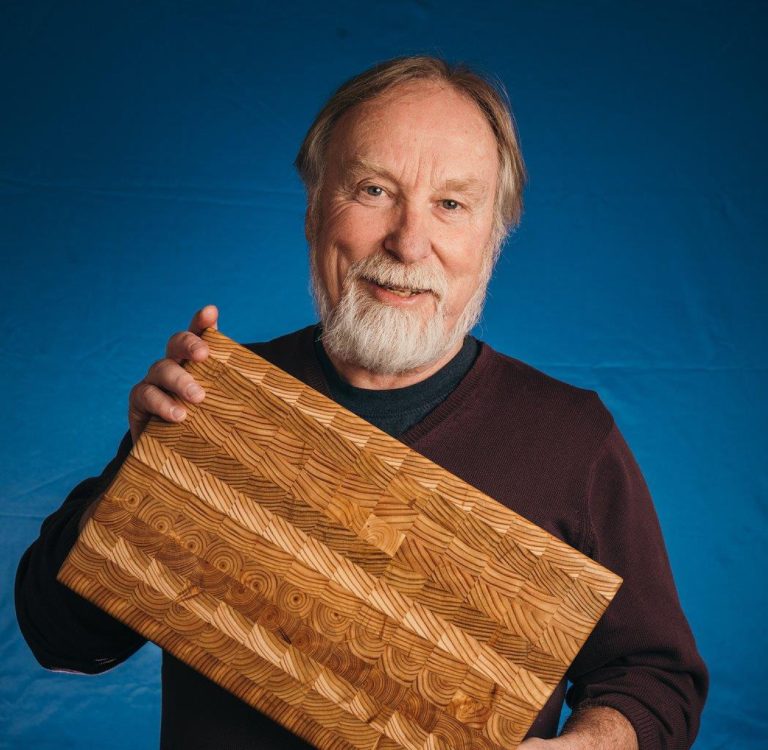
Don has been the CEO of Larch Wood Enterprises in East Margaree, Nova Scotia, since 2004 until present.  He has taken it from a 4 person operation to 20 plus employees. Larch Woods products are exported world wide.  Before That Don had a successful 35 year career as an independent builder, designer and cabinet maker in Ontario and Nova Scotia. Don moved to Cape Breton in 1985 from rural Ontario and never looked back. 

After attending a hard wood conference in Port Hawkesbury in 2016, Don and Kari Easthouse from the Cape Breton Private Land Partnership approached Inverness Councilor Jim Mustard about forming a co-op dedicated to sustainable forestry and creating the opportunity for more value added wood products being produced in Cape Breton.  Breton Forest Innovation Co-op was founded in 2017.  The site of the former Fine Wood Flooring facility in Middle River, 22,000 sq. ft of buildings and offices was purchased with the help of New Dawn Enterprises and the Sydney Credit Union. They remain vigilant in promoting their vision and are currently working on a proposal for the Nova Scotia Forest Industry Transition Fund.

Gordon Slade

Gordon Slade is a leader in the sustainable economic development of Newfoundland and Labrador. After an early career in fisheries conservation, in 1975, he was appointed the provincial Deputy Minister of Fisheries. In 1982, he was appointed the Federal Economic Development Coordinator, Newfoundland Region. In 1987, Mr Slade became Vice-President, Newfoundland Division, for the Atlantic Canada Opportunities Agency (ACOA). He also served as Co-Chair of the $300 million dollar (CAD) Canada-Newfoundland Offshore Development Fund.  In 1988, Mr Slade established The Battle Harbour Historic Trust to protect the history and culture of the intact salt-fishing village of Battle Harbour.  Mr Slade has been awarded the Order of Canada for his community work.  The Battle Harbour initiative has earned numerous awards, including the Royal Canadian Geographical Society’s Gold Medal. He has received an Honorary Doctorate Degree from Memorial University, and the Order of Newfoundland and Labrador.  Mr Slade’s latest project is the renaissance of the remote region of Fogo Island and Change Islands with the Shorefast Foundation. He is developing partnerships with governments, communities, and local residents to preserve local traditions, while developing a model for the sustainable management of rural communities internationally.

Susan Witt

Susan Witt

Susan is the Executive Director of the Schumacher Center for a New Economics, heir to the legacy programs of the E.F.Schumacher Society.  She led the development of the Schumacher Center’s highly regarded lecture, publication, conference, seminar, and library programs. These programs established the Schumacher Center as a pioneering voice for a new economy shaped by social and ecological principles. Over the past 35 years, Susan has maintained a deep commitment to implementing projects for the commons, such as land trusts, micro-lending and local currency initiatives.

While deeply engaged with the history and theory of a new economy and its implications for the transformation of our relationship to land, labor, and capital, Susan Witt has simultaneously worked to place theory into practice in her home region of the Berkshires, with projects such as community land trusts, local currencies and community supported industry.

Karen Foster

Karen Foster is Canada Research Chair in Sustainable Rural Futures for Atlantic Canada. She is Assistant Professor in the Department of Sociology and Social Anthropology at Dalhousie University, where she teaches about work, economy and gender. Her research spans economic sociology, the sociology of work, and the history of economic thought.

Her forthcoming book, Productivity and Prosperity (University of Toronto Press, 2016), examines the meaning and measurement of “productivity” in Canada. She is a founding member of Basic Income Nova Scotia, an avid cyclist, partner to Brian Foster and mother to 2-year-old Alice.

Albert Marshall

Albert is a highly respected and much loved Elder of the Mi’kmaw Nation. He lives in Eskasoni First Nation in Unama’ki (Cape Breton), NS, and is a passionate advocate of cross-cultural understandings and healing and of our human responsibilities to care for all creatures and our Earth Mother.  He is the “designated voice” with respect to environmental issues for the Mi’kmaw Elders of Unama’ki and he sits on various committees that develop and guide collaborative initiatives and understandings in natural resource management or that serve First Nations’ governance issues, or that otherwise work towards ethical environmental, social and economic practices. 

Elder Marshall coined the English phrase “Two-Eyed Seeing” for a guiding principle found in Mi’kmaq Knowledge as reflected in the language. Two-Eyed Seeing in his language is known as Etuaptmumk, which encourages the realization that beneficial outcomes are much more likely in any given situation if we are willing to bring two or more perspectives into play. As Elder Marshall says, “learn to see from your one eye with the best strengths in the Indigenous knowledges and ways of knowing … and learn to see from your other
eye with the best strengths in the mainstream (Western or Eurocentric) knowledges and ways of knowing … but most importantly, learn to see with both these eyes together, for the benefit of all”.

Gregory Heming

Gregory is a Co-founder of the Centre for Local Prosperity.  He is a philosophical ecologist, writer, climate activist and former elected official. He holds a PhD in Literary Ecology and Northern Studies with special interest in steady-state economics, public policy and ecocide. 

Christopher Googoo

Chris joined Ulnooweg Development Group in April 2000 as a Procurement Liaison Officer, supporting Aboriginal businesses access procurement opportunities with government and private sector industries. In 2004, he accepted a Commercial Account Manager position serving the Nova Scotia region. In 2006, he was appointed General Manager of Ulnooweg. In recognition of Chris’s contribution to the overall management of Ulnooweg as a growing organization, Chris’s title was changed to Chief Operating Officer in 2017.

He is a member of the Tripartite Economic Development Working Committee, Board member of the Community Sector Council of Nova Scotia and the Rural Communities Foundation of Nova Scotia. In 2016 he was elected to the Board of the Atlantic Provinces Chamber of Commerce and in 2018 he was appointed to the Innovacorp Board. His previous work has included membership with the Atlantic Aboriginal Economic Developers Network and the Mi’kmaw Economic Benefits Office. He was also a board member of the National Aboriginal Capital Corporation Association representing the Atlantic and Quebec region for over a decade.

Chris has a Bachelor of Business Administration degree from St. Francis Xavier University and is a member of the We’koqma’q First Nation living with his wife and three children in Millbrook.

Dayle Eshelby

Dayle draws strength from enduring community growth and development. Dayle is the Rural Coordinator for St. Mary’s Silver Economy Engagement Network and a Lockeport Town Councillor. Dayle leads RESOLVE! Management enhancing development leadership by empowering an organization’s people and has Community Service Employment Support Caseworker experience. Involvement with academic institutions include Research Assistant and Coordinator in a partnership with Mount St Vincent University/ Tri-County Women’s Centre, over fifteen years at McGill University and participation in the President’s Roundtable at the Canadian Association for University Continuing Education National Convection. Locally Dayle was Lockeport’s Integrated Community Sustainability Plan (ICSP) Coordinator and is Chairperson of numerous community boards.

Justin Cantafio

Justin is anchored by a steadfast belief in the power of small-scale, community-based businesses to build truly sustainable social and economic development. It’s what drove him to spend his master’s degree living and working on ten organic farms from Quebec to the Pacific Coast. He’s since helped with managing Atlantic Canada’s first sustainable seafood subscription program through Off the Hook Community Supported Fishery, worked with the Ecology Action Centre to spearhead a Canada-wide program to promote locally-sourced food in schools, universities, and hospitals, and connected small-scale fishers and aquaculturalists with high-value markets across Nova Scotia and beyond with Halifax’s Afishionado Fishmongers.

Justin is currently the Executive Director of Farmers’ Markets of Nova Scotia, a non-profit cooperative of over 35 farmers’ markets throughout the province. When he’s not crafting up ideas to re-localize our economy and promote local businesses, you might find Justin running in the woods, cooking up big hearty meals with friends, or relaxing in his off-grid cabin by the sea.

English